
District Mapping of faith group services, long-term shifts in NHS strategy and connections between churches, police, council and healthcare is all creating a healthy way ahead for the communities of Lancashire.
Continuing the Momentum of Cross-Sector Collaboration
Faith and civic partnership events are nothing new in Lancashire. Such gatherings have happened consistently since 2022. With the mapping results for 3 districts, the Global week of Prayer for Christian Unity and Gather Movement’s Your City, Your Summit initiative all coinciding, it seemed like the right time for the churches to convene the faith, charity and public sector leaders for the region.
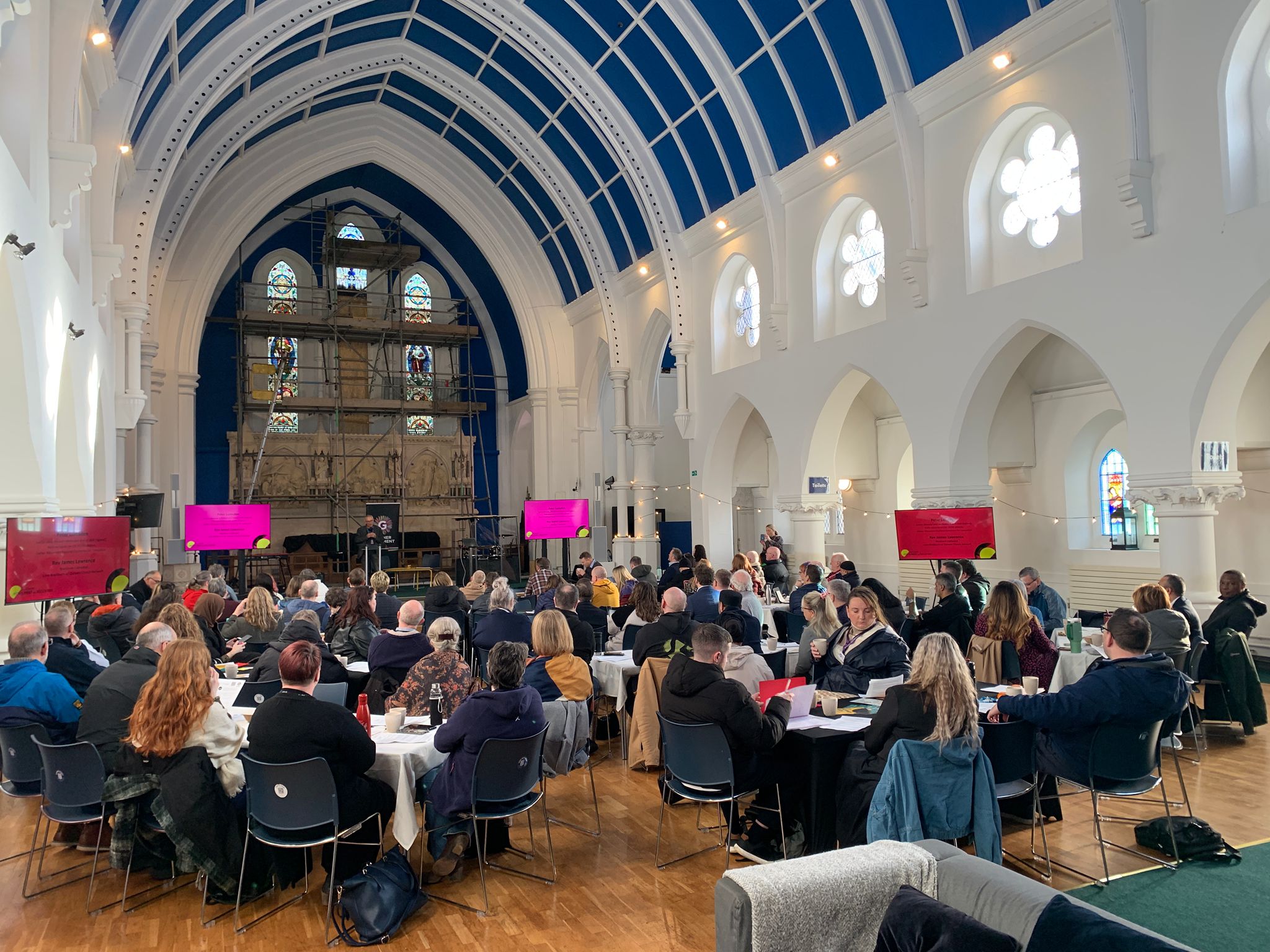
The Lancashire Movement Summit 2026, held on 20th January at St Luke’s Church in Blackburn, marked a significant moment for the Movement for Recovery across the county. The summit brought together more than 80 leaders and practitioners from churches, mosques, charities, statutory services, and civic organisations representing Lancashire’s diverse urban, rural, and coastal communities.
With over 600 churches and more than 100 mosques across Lancashire, the summit set out to explore how faith communities can work more intentionally alongside the NHS, local authorities, police, fire services, and voluntary sector partners to address some of the county’s most pressing challenges.
The gathering reflected a shared conviction: Lancashire’s future health and wellbeing will not be secured by institutions acting alone, but through relationships, trust, and collaboration rooted in local communities.
A Powerful Call to Relationship and Love
The one day event began with a very warm welcome by the hosts St Luke’s of Blackburn. Peter Lumsden opened the day with the hope that every person would leave feeling more connected, inspired and motivated.
Several shared frameworks shaped the day:
Four Types of People for Community Change Successful movements require:
- Critical yeast – people transformed by love who catalyse change.
teachers, GPs, and grandparents
-
Anchor people – deeply rooted community figures such as faith leaders, teachers, GPs, and grandparents
-
Networkers – those who connect people and organisations
-
Reconcilers – relationship healers when trust breaks down
The Four ‘L’ Plates for Neighbourhood Work
- Listening with humility
- Learning with curiosity
- Leading with vulnerability
- Linking with partners
The keynote speaker Prof Andy Knox MBE, Acting Medical Director Lancashire and South Cumbria Integrated Care Board, in a very powerful and emotive speech shared the idea of relationship and love as being crucial to human flourishing. Using the parable of the Good Samaritan as an example of what it means to be a neighbour in complex, divided communities. A contemporary retelling challenged participants to recognise their own vulnerability and need for love, rather than adopting a rescuer mindset. Love was presented not as sentiment, but as action and daily choice, echoing the insight that social change flows from relationships across differences.
The morning was focussed around provision and treatment and the afternoon was focussed around prevention and partnership. Stories of partnership were shared jointly by faith and public sector leaders so participants were able to experience some theory being put into practice.
Practical examples brought the vision to life:
- Safe Families-Home for Good shared over a decade of bridging church and statutory services, supporting more than 11,000 families.
- Social Prescribing in Blackburn with Darwen demonstrated strong reach into areas of high deprivation, with faith groups playing a key role in reducing isolation.
- Green Social Prescribing in Ribble Valley showed how small, accessible outdoor projects can unlock confidence and connection.
- Downtown Burnley illustrated the power of co-location, where multiple agencies work from one space and cross-refer effectively.
I loved being a part of this. The F part of the VCFSE is so important to us here in Lancashire and South Cumbria Integrated Care Board (ICB) especially as we co-create neighbourhood health and care.
– PROF ANDY KNOX MBE, Acting Medical Director Lancashire and South Cumbria Integrated Care Board
Faith and Public Sector Partnerships Bring Real Change for Communities
In the afternoon, round table discussions were grouped by district which enabled new connections and robust conversations on the practical benefits of cross-sector partnerships. The results of the mapping in and the new long-term NHS strategy were shared and gave a lot of focus and clarity for the discussions to dive into the case study.
The NHS strategy of three major ‘left shifts’ was a recurring theme:
- From hospital to community
- From treatment to prevention
- From analog to digital
Participants acknowledged the challenge of implementing these shifts amid funding pressures and workforce burnout. Faith communities were recognised as vital partners, already embedded in neighbourhoods and able to reach people who operate at what was described as “minus five” levels of patient activation.
I think people saw a message. They saw the faith sector as being competent and able to take a lead. Not only that the faith sector is competent, but the faith sector is informed. We are able to help contribute to that left shift of the NHS long-term plan.
– Peter Lumsden
The summit emphasised that friendship, belonging, and trust are foundational to health and wellbeing, often preceding any formal service engagement.
Frameworks and Commitments
The Summit was shaped around three core aims:
- To make visible what faith communities are already contributing to health, wellbeing, and social support across Lancashire.
- To equip participants with tools for mapping and connection, enabling better partnership working and reducing duplication.
- To explore new models of collaboration aligned with the NHS long-term strategy shift from hospital to community, treatment to prevention, and analog to digital care.
The conclusion was clear: waiting for institutional solutions alone is no longer viable. Community-based, relational approaches are essential.
It was a fantastic opportunity to develop connection, learn from and with each other and realise how much more we can achieve when we work together.
– JOANNE HOLLAND Places of Welcome, Church Urban Fund
The Movement for Recovery Summit provided a fantastic opportunity to network, explore and develop emergent links across a broad range of Statutory and VCFSE services and organisations particularly incorporating the Faith sector through strengthening connections, building relationships and trust.
– CHRIS TRUCKLE, Service Delivery Co-ordinator, Social Prescribing and Community Connecting, Blackburn with Darwen Borough Council
Looking Ahead for the Region
The closing session identified key reflections:
- Social isolation is a unifying challenge across Lancashire.
- Cross-sector presence created momentum and legitimacy.
- Churches must move beyond silos and engage existing civic networks.
- Mapping tools are powerful but require ongoing training and support.
- The church’s distinctive contribution is addressing relational poverty.
Participants committed to:
- Continuing and expanding mapping across Lancashire districts
- Strengthening relationships with NHS, councils, police, and fire services
- Developing welcoming spaces and community hubs
- Offering follow-up webinars and training on mapping tools
- Sharing stories and data through the Movement for Recovery Lancashire network
The Movement for Recovery Team will be meeting with key public sector leaders to follow up after the event and are beginning mapping work in more districts of the region.
If you’d like to find out more about all that’s happening in Lancashire, contact Peter Lumsden on
